The L6 System-Design Thinking Loop
A repeatable Staff-level answer: define correctness, size the load, design failure paths, and measure recovery.
The big idea
An L6 answer is not a list of technologies. It explains what must never break, what peak load changes, and how the system behaves when a dependency fails.
An airport is not judged only on sunny days. It must keep people safe during a storm, route around a closed runway, and tell passengers what happens next.
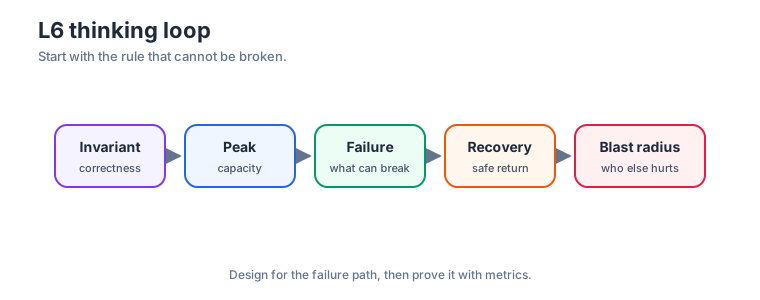 The L6 design loop: invariant first, then scale, failure, recovery and blast radius
Five questions before drawing boxes
| Question | Why it matters | Example |
|---|---|---|
| Invariant | Defines correctness. | A card is never charged twice. |
| Peak | Average traffic hides capacity limits. | 2M checkouts in five minutes. |
| Failure window | Finds duplicate/lost-work gaps. | Provider charge succeeds, app crashes before saving. |
| Recovery | Retries need evidence, not guesses. | Look up the provider with the same key. |
| Blast radius | Shared resources spread incidents. | An export exhausts checkout's DB pool. |
A useful answer shape
- State assumptions and the invariant.
- Draw the smallest normal-load design.
- Name the first peak bottleneck.
- Walk one crash, timeout, or retry.
- Explain metrics, mitigation, and the durable fix.
💡 A good trade-off is specific: “I accept a few seconds of stale playback position to keep playback available” is stronger than “eventual consistency is fine.”