What Is Clean Code?
Clean code is code that another person can read, understand and change safely. Here is why that matters more than clever code.
The big idea
Imagine two kitchens. Both can cook dinner. In the first, pans, spices and knives are thrown everywhere. In the second, every item has a labelled place.
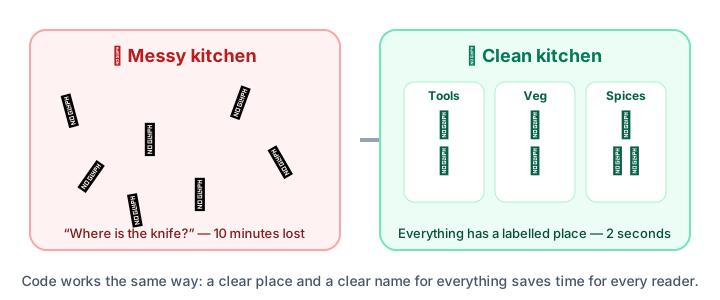 Messy vs clean kitchen: both cook, only one is easy to work in
Code is the same. Working code is the minimum. Clean code is working code that is easy to read and easy to change.
💡 Remember: Developers spend about 10× more time reading code than writing it. Every minute you spend making code clearer saves many minutes later, for you and for your teammates.
A definition you can remember
Clean code is code that:
| Quality | Question to ask yourself |
|---|---|
| Readable | Can a new teammate understand it without asking me? |
| Simple | Is this the simplest thing that solves the problem? |
| Focused | Does each function or class do one thing? |
| Tested | Can I change it and quickly know if I broke something? |
| Honest | Do the names tell the truth about what the code does? |
Why messy code becomes expensive
Messy code feels fast on day 1. By month 6, every change takes longer because nobody dares to touch anything.
The rising line is a messy codebase. The flat line is a clean one: a little slower at the start, much faster later.
This hidden cost is called technical debt. Like a loan, it has to be paid back with interest.
Same logic, two styles
Both functions below do exactly the same thing. Which one would you rather debug at 2 a.m.?
❌ Hard to read
function calc(a, b) {
  let t = 0;
  for (let i = 0; i < a.length; i++) {
    if (a[i].s === 1) t += a[i].p * a[i].q;
  }
  return b ? t - t * 0.1 : t;
}
✅ Clean
const MEMBER_DISCOUNT = 0.1;

function orderTotal(items, isMember) {
  const subtotal = items
    .filter((item) => item.inStock)
    .reduce((sum, item) => sum + item.price * item.quantity, 0);

  return isMember ? subtotal * (1 - MEMBER_DISCOUNT) : subtotal;
}
What changed?
- Names explain intent:
calcbecameorderTotal, anda[i].s === 1becameitem.inStock. - No magic numbers:
0.1has a name,MEMBER_DISCOUNT. - The steps read like a sentence: filter the items in stock, then add up price × quantity.
The clean code toolbox (this course)
The Boy Scout Rule
🏕️ “Always leave the campground cleaner than you found it.”
You don't need to rewrite everything. Each time you touch a file, make one small improvement: rename a confusing variable, extract a function, delete dead code. Small steps add up.
Key takeaways
- Clean code is written for humans first, computers second.
- Messy code creates technical debt that slows every future change.
- Good names, small functions and simple logic are the main tools.
- Improve code a little every time you touch it.
Try it yourself
Open a project you wrote a few months ago. Find one function you struggle to understand now. Rename one variable so it explains itself. That is your first clean code refactor.